

Your 6-Step Roadmap to Buying a Home in Canada
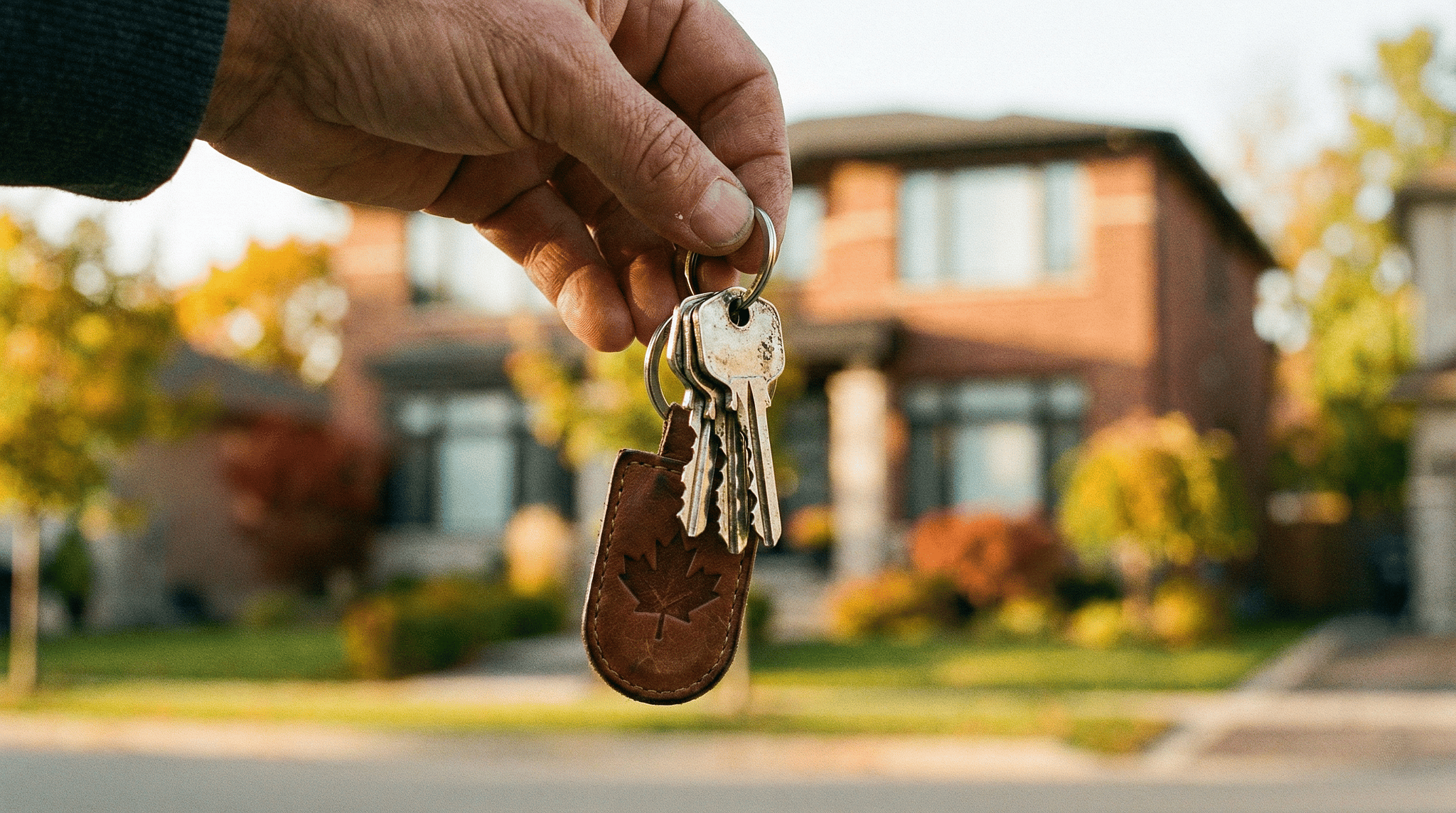
Buying a home isn't just a money decision, it tends to take over your life for a while. Suddenly, you're scrolling late at night, doubting neighbourhoods you once loved, and Googling mortgage jargon at breakfast. It can get exciting fast, but, honestly, it's also a lot to handle.
If you're shopping in Ontario, and especially in the GTA, brace yourself for a bunch of curveballs. There are rules and costs most buyers aren’t talking about. On top of that, spring 2026 has opened up some fresh opportunities for buyers, but don’t expect it to be simple.
This is a real look at what buying a home here actually feels like. No sugar-coating, just the truth.
Step 1: Get Your Finances Straight, Right Now
Let’s be real, most people start by scrolling listings before crunching numbers. It’s more fun. But if you skip the finance step, you’ll either fall for a place you can’t afford or miss out because your paperwork wasn’t ready.
The 2026 Mortgage Stress Test
You still have to pass the stress test for all federally regulated mortgages. The rule: you need to qualify at either your contract rate plus 2% or at 5.25%, whichever is higher. The Bank of Canada’s policy rate is 2.25% as of April 2026, with most fixed rates in the high 3s or low 4s, so you’re probably getting tested at your actual rate plus 2%.
To give you a sense: If your household brings in $150,000 a year, you might qualify for $820,000 to $870,000 without the test. But toss in a 6% stress test and that can drop $80,000 to $120,000. Better to know this up front, sitting with your broker, rather than after you’ve toured half the city.
30-Year Amortizations for First-Time Buyers
Since December 2024, first-time buyers with insured mortgages (less than 20% down) and anyone buying a brand new home can now go with a 30-year mortgage. It used to cap at 25 years, but the extra time lowers monthly payments, which can help you pass the stress test.
Stack Your FHSA and RRSP Home Buyers’ Plan
First-timers have two big tools to build a down payment:
- First Home Savings Account (FHSA): Put in up to $8,000 per year (max $40,000). It lowers your taxable income, and withdrawals for buying a home are tax-free. Start an account ASAP, even if you’re just thinking about buying.
- RRSP Home Buyers’ Plan: Take out up to $60,000 per person (so, $120,000 for a couple) tax-free to buy your first home. You get 15 years to put it back.
You can use both at once. If you’re able, stack them.
Down Payment Rules and the $1.5M Threshold
Down payments in Canada work on a sliding scale, and the government recently raised the insured mortgage cap from $1 million to $1.5 million. This matters a lot. You don’t need 20% down just because your dream townhome crosses the million mark anymore.
Here’s the breakdown:
- Under $500K: 5% minimum
- $500K to $1,499,999: 5% on the first $500K, then 10% on the rest
- $1.5M and up: 20% minimum (insurers won’t help here)
With less than 20% down, you’ll pay CMHC insurance premiums. For, say, an $800,000 home with 10% down, that’s about $20K to $24K, tacked right onto your mortgage.
GST/HST Rebates for New Builds
If you’re looking at pre-construction or a new home, heads up: major tax breaks are rolling out. The federal GST/HST rebate for first-time buyers applies to homes bought after March 20, 2025. Ontario is also proposing a bigger HST rebate (up to $130,000!) on new builds up to $1.5M. But since this needs matching federal rules, check with your lawyer or tax pro to know exactly what’s on the table for your deal.
Step 2: Nail Down What You Actually Want and What You Can Live Without
A lot of buyers skip this honest part. Make two lists: your non-negotiables (dealbreakers), and your would-be-nice-to-haves (stuff you like, but can let go).
Common dealbreakers in the GTA:
- School district: The boundary lines are strict and can change street to street.
- Commute: Don’t guess. Triple-check your company’s work-from-home policy before you sign up for a brutal drive.
- Number of bedrooms: Many buyers only figure out their real minimum after a few disappointing showings.
Stuff that’s just a preference:
- Finished basement: Cheaper to do yourself than to pay for it on the listing.
- Renovated kitchen: Cosmetic fixes are easy (and less expensive than you think).
- Parking: Street permit parking actually works pretty well in dense neighbourhoods.
Step 3: The Property Search - Why Listings Only Tell Part of the Story
Public listing sites are a starting point. But they won’t show you the property’s full history, off-market pocket listings, or real-world problems like daily traffic or basement flooding.
This is where your agent is worth their cut. Sending you links isn’t the magic, they know which condo boards have ugly assessments coming, which streets always flood, and what the photos aren’t showing. When touring, don’t be blinded by fresh paint or shiny floors. Those are easy distractions from things like sketchy foundations or that unmistakable basement musty smell.
Step 4: Making an Offer That Gets Noticed
Spring 2026 isn’t the wild west it was a few years back. Recent TRREB numbers (Feb–March 2026) say the sales-to-new-listings ratio is around 36%, more of a buyers’ market. Average price is just over $1M and homes are taking their time to sell now (think 25 to 54 days, depending on the type).
That said, the market isn’t all the same. A detached home near a great school in Markham still moves differently from a downtown condo.
Offer Nights vs. Anytime Offers
Some hot neighbourhoods still use “offer nights”, the old underprice-and-bid-war trick. But these days, more sellers are open to offers at any time, so you can actually negotiate.
Conditions Are Back
You don’t have to skip financing or inspections like it’s 2021. Add a home inspection and a finance condition. If you’re locked in a real bidding war and want a winning edge, book a pre-offer inspection (costs about $450–$650). That way, you get the info you need, fast.
Deposits
In Ontario, the deposit is due within 24 hours after your offer is accepted, not later. Expect $20,000 to $50,000, liquid and ready to move. It lands in the seller’s brokerage trust account and gets credited toward your price on closing.
Step 5: Due Diligence: This Is Where Smart Buyers Save Themselves Headaches
Once you get that accepted offer, you usually have 3–7 business days of a “conditional period.”
Home Inspection
A good inspector checks structure, roof, plumbing, wiring, heating/cooling, and signals of leaks. Red flags: knob-and-tube wiring or major furnace issues. Don’t freak out about old water tanks or a few cracks in the drywall, those are small potatoes. Remember, they can’t see through walls.
Finalizing the Mortgage
Your lender will want an appraisal. If it says the home’s worth less than you paid, you need to cough up the difference in cash. Don’t skip this step.
Status Certificate for Condos
For condo buyers, your lawyer reviews the status certificate (the reserve fund, minutes, upcoming fees). This isn’t optional, and at $150–$200, it’s the smartest money you’ll spend.
Step 6: Closing Day
A lot of buyers get blindsided here.
Ontario and Toronto’s Land Transfer Taxes
Ontario charges a land transfer tax on every home purchase. If you buy in the actual City of Toronto, you pay BOTH the provincial and city taxes.
For a first-time buyer of a $900K home:
- Both taxes, before rebates: $14,475 each
- Max first-time buyer rebates: $4,000 off (province), $4,475 off (Toronto)
So your new bills:
- Ontario Tax: ~$10,475
- Toronto Tax: ~$10,000
- If you’re in Toronto: Total is about $20,475
Buy anywhere in the 905 like Markham, Vaughan, Mississauga, or Brampton and you only pay the provincial tax. That’s an immediate $10,000 savings on a $900K home.
What Are All Your Closing Costs?
Let’s run the numbers for a $900,000 place in the GTA:
- Ontario Land Transfer Tax: ~$10,475 after rebate
- Toronto Land Transfer Tax (if in 416): ~$10,000 after rebate
- Legal fees: ~$2,000
- Title insurance: ~$300
- Home inspection: ~$500
- Movers: $1,500–$3,000
- Property tax and utilities: $500–$2,000 more
Total cash needed for closing in Toronto? Around $25,000–$28,500, not including your down payment. In the 905, more like $15,000–$18,500. Make sure you’ve got it set aside.
What It Actually Feels Like
Here’s what no checklist tells you: Home buying in Ontario is draining. Odds are, you’ll lose out on at least one place. You’ll have weeks where you feel totally priced out and other weeks where you’re convinced you’re about to do something stupidly expensive. Everyone goes through it.
What really matters? Being prepared. Know your real numbers. Understand the steps. Work with people who’ll give it to you straight, not just tell you what you want to hear.
Right now, buyers have an edge that hasn’t existed in years. If you’ve been holding back, this spring is worth a real look.
If you don’t know where to start, or if you’re halfway in and feeling stuck, let’s talk it through. No hard sell, just honest answers about where you’re at and what you can realistically do.
At Realtris, we help Ontario buyers with up-to-date listings, local knowledge, and real, straightforward advice.