

Navigating the January 2026 Market of Contrasts
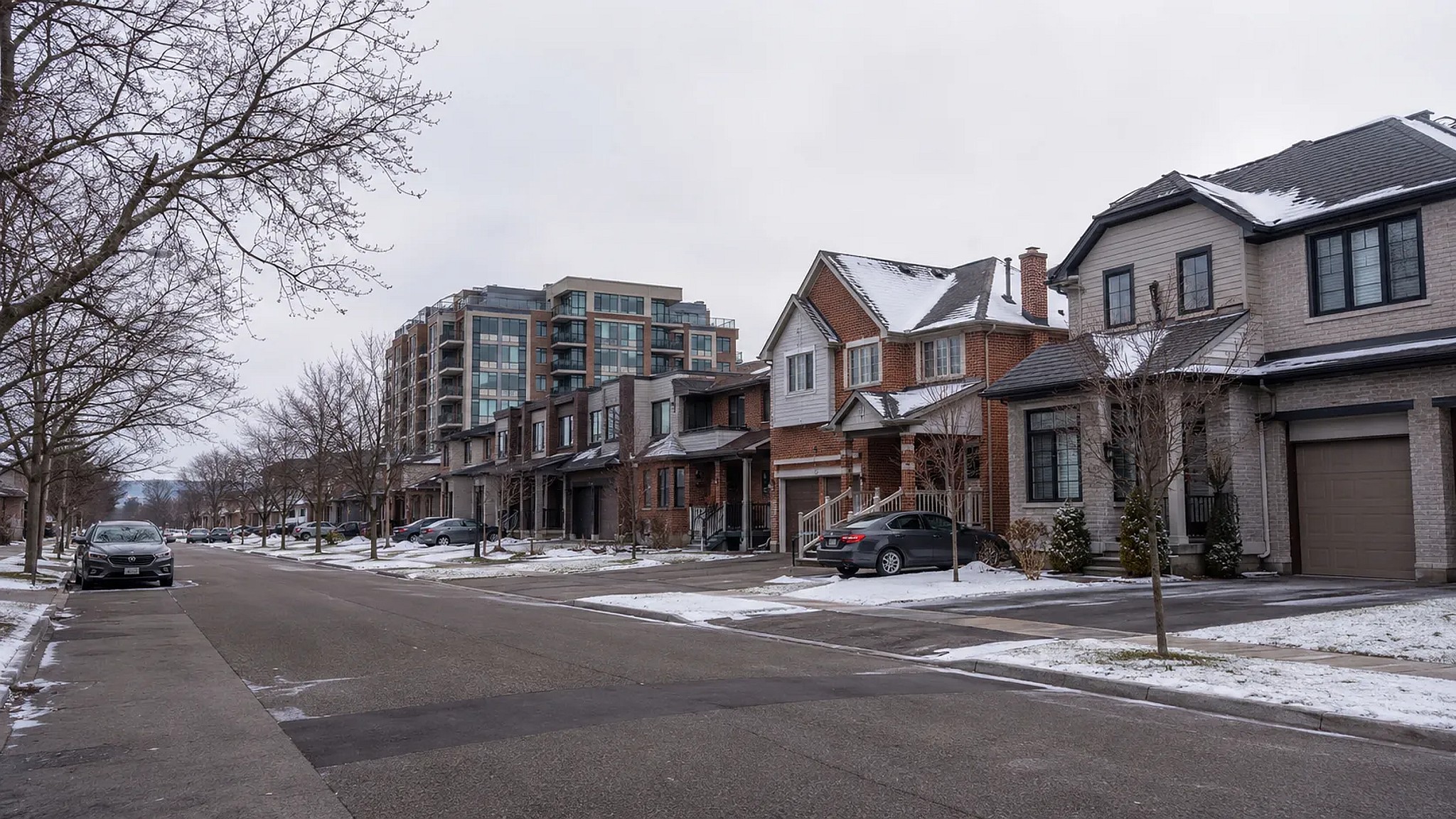
The Greater Toronto Area (GTA) housing market has opened 2026 with a definitive shift into buyer’s territory. Following a series of corrective trends throughout late 2025, the January data reveals a market that is fundamentally recalibrating, offering a sense of stability and predictability that has been absent for years. For the first time since 2021, the average selling price across the GTA has fallen below the $1-million mark, landing at $973,289 which is a 6.5% decrease from the previous year.
January by the Numbers: A Strategic Cooling
The latest report from the Toronto Regional Real Estate Board (TRREB) highlights a market defined by cautious demand and elevated choice.
- Total Sales: 3,082 units were recorded, marking a 19.3% decline year-over-year.
- New Listings: 10,774 homes entered the market, which is a 13.3% decrease compared to last year, yet active inventory remains historically high.
- Inventory Levels: Active listings reached 17,975, an 8.1% increase that provides buyers with significant negotiating power.
A Market of Contrasts: Detached vs. Condos
The "Market of Contrasts" is reflected in the divergent performance of housing segments. While demand for low-rise homes remains firm, the condominium sector is currently navigating its most significant oversupply in decades.
The Detached Segment Detached homes continue to be the market’s primary driver, accounting for 43.9% of total sales. While benchmark prices fell to $1,224,300 (an 11% annual decline), this segment is showing more resilience in the urban core (416) compared to the suburbs (905). In Mississauga, for instance, an 89.7% surge in new listings has pushed inventory levels significantly higher.
The Condo Crisis & Opportunity The condo market recorded only 856 sales in January, hitting a volume low not seen in over 30 years. New condo sales have plunged 95% compared to the 2021 peak, and several major projects were cancelled in late 2025. While this creates a long-term supply gap, it currently leaves resale buyers with a Months of Inventory (MOI) of 7.8 which is the highest leverage point in the market.
Economic Context: Rates & Arrears
A key factor in this transition is the Bank of Canada’s recent decision to hold interest rates at 2.25%. This rate stability era is helping clear the fog for prospective buyers, though many pandemic-era homeowners are still feeling the squeeze. Mortgage arrears in the GTA have quadrupled over the last three years as nearly 2.2 million mortgages face renewal at current rates.
Strategic Insights for 2026
Success in this environment requires a departure from past tactics:
- Price with Purpose: With inventory rising, sellers cannot afford to chase the market down. Pricing accurately from day one is the only way to attract high-quality interest.
- Negotiate with Confidence: Buyers can now focus on property fundamentals, including home inspections and conditional offers, without the pressure of bidding wars.
- Think Long-Term: While sales are currently subdued, the 2026 outlook projects between 60,000 and 70,000 total transactions as confidence gradually returns in the second half of the year
Frequently Asked Questions
- Is now a good time to buy in the GTA? With the average price below $1M and inventory up 8.1%, conditions are currently very favorable for buyers seeking long-term value.
- Are prices expected to fall further? Most forecasts suggest prices will stabilize in the latter half of 2026 as buyers absorb the current elevated inventory.
- What is happening in Mississauga specifically? Mississauga is seeing one of the highest inventory surges in the GTA, with new listings up 89.7% in January.